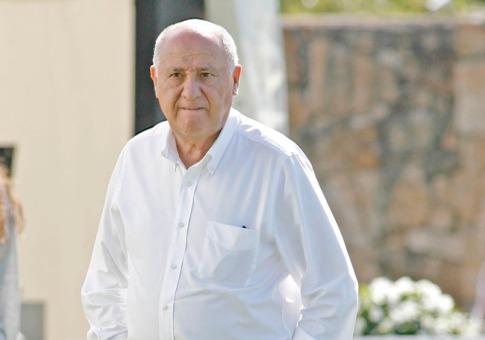
Ludwig Merckle's Billion-Dollar Strategy: Ratiopharm to Heidelberg
Ludwig Merckle stands as a testament to resilience, strategic foresight, and the power of decisive leadership in the face of immense adversity. The German industrialist, renowned for his astute business acumen, has not only preserved but significantly expanded his family's wealth, cementing his status as a prominent figure in the global economy. With an estimated Ludwig Merckle net worth reaching an impressive $9.49 billion in 2024, his journey from inheriting a distressed empire to becoming a billionaire industrialist is a compelling narrative of strategic transformation. Central to this saga is his bold orchestration of the Ratiopharm sale and the subsequent solidification of his family's stake in what is now Heidelberg Materials.
From Ulm to the Helm: A Billionaire's Early Foundations
Born in Ulm, Germany, in 1965, Ludwig Merckle was steeped in the world of entrepreneurship from an early age. His father, Adolf Merckle, was a visionary industrialist who built the Merckle Group into a diversified conglomerate with significant interests spanning pharmaceuticals, cement, and engineering. Growing up within this dynamic environment profoundly shaped Ludwig's career path and instilled in him a deep understanding of complex business operations.
His academic pursuits further prepared him for future leadership. Ludwig pursued higher education at the esteemed University of Mannheim, where he earned a degree in business information technology (Diplom-Wirtschaftsinformatiker). This blend of business and technological insight would prove invaluable in navigating the complexities of a modern global enterprise.
Ludwig Merckle's professional journey began outside the family fold, first as a strategic consultant at Roland Berger in 1993. This brief but impactful tenure provided him with external perspectives and analytical tools crucial for strategic decision-making. By 1995, he transitioned into the family business as an assistant manager, quickly rising through the ranks. His leadership capabilities were soon recognized, leading to his appointment as CEO of Merckle GmbH, the parent company of the prominent generic drug manufacturer Ratiopharm GmbH, by 1997. His role expanded further in 2005 when he became CEO of VEM Vermögensverwaltung GmbH, signaling his growing influence and strategic oversight within the Merckle Group.
The Crucible of Crisis: Navigating Unprecedented Storms
The true test of Ludwig Merckle's leadership came in 2009, under circumstances as tragic as they were financially daunting. Following the global financial crisis of 2008, the Merckle Group found itself in a precarious position, burdened by substantial debts. This immense financial pressure culminated in the heartbreaking suicide of his father, Adolf Merckle.
Suddenly, Ludwig was thrust into the role of steward for a multi-billion-euro empire teetering on the brink. The group faced not only the profound emotional aftermath of his father's death but also intense scrutiny from creditors and the financial markets. The challenge was immense: stabilize the debt-ridden conglomerate, restore stakeholder confidence, and preserve the family's legacy. This period served as a brutal crucible, forcing Ludwig to make swift, strategic decisions under unimaginable pressure. It demonstrated a rare blend of personal fortitude and astute business acumen.
Insight: Crisis Management Lessons from Merckle
Ludwig Merckle's response to the 2009 crisis offers critical lessons for any business leader:
- Decisive Action: He didn't hesitate to make difficult choices, prioritizing the long-term health of the group over sentimental attachments.
- Clear Prioritization: Alleviating debt was the immediate, overriding goal, guiding all strategic sales.
- Strategic Divestment: Identifying valuable, marketable assets that could fetch a high price was key to generating liquidity quickly.
- Focus on Core Strength: While Ratiopharm was a major asset, the long-term vision involved solidifying holdings in other robust sectors.
The Ratiopharm Gambit: A Strategic Divestment that Saved an Empire
Ludwig Merckle's most pivotal strategic move was the decision to divest Ratiopharm, the generic drug manufacturer that had been a cornerstone of the family's pharmaceutical interests. This was not a decision taken lightly; Ratiopharm was a well-established and profitable entity. However, in the context of the group's substantial debt and the urgent need for liquidity, it represented the most viable path to solvency.
In a landmark deal, Ludwig orchestrated the sale of Ratiopharm to Teva Pharmaceutical Industries for a staggering €3.6 billion. This transaction was a masterstroke. It not only injected a massive infusion of cash into the Merckle Group, directly addressing the pressing debt obligations, but also demonstrated Ludwig's ability to navigate complex negotiations under extreme pressure. The Ratiopharm sale became the linchpin that allowed the family business to escape financial collapse, effectively stabilizing the group's economic health and providing a much-needed lifeline.
This strategic divestment was more than just a sale; it was a re-calibration. It allowed the Merckle family to streamline their holdings and focus on sectors with strong long-term growth potential, free from the immediate burden of overwhelming debt. The proceeds were strategically deployed to strengthen the remaining core assets, particularly those in the construction materials sector.
Heidelberg Materials: Forging a New Cornerstone of Wealth
While the sale of Ratiopharm grabbed headlines, Ludwig Merckle's long-term strategy involved solidifying the family's position in other key industries. Following the crisis, a significant portion of his wealth became tied to Heidelberg Materials, formerly known as HeidelbergCement. Initially, as part of the broader debt-reduction strategy, a 55% stake in HeidelbergCement was sold for €2.5 billion. However, it was the retention and subsequent growth of the remaining stake that became a primary driver of Ludwig Merckle's impressive billionaire status.
This move highlighted a crucial aspect of Ludwig's strategy: identifying and nurturing long-term value. While immediate sales were necessary, he understood the enduring power of industries like cement and construction materials, which are fundamental to global infrastructure development. By preserving a substantial holding in Heidelberg Materials, Ludwig positioned the family's wealth to benefit from the cyclical yet robust growth of the construction sector. Today, Heidelberg Materials stands as a global leader in cement, aggregates, and ready-mix concrete, providing a stable and appreciating asset base for the Merckle family.
The strategic shift from heavy reliance on a generic pharmaceutical giant (Ratiopharm) to a diversified portfolio anchored by a leading construction materials company (Heidelberg Materials) demonstrates a thoughtful evolution of the family's investment thesis, adapting to market realities and capitalizing on different industry dynamics.
A Diversified Legacy: Beyond Cement and Pharmaceuticals
Ludwig Merckle's portfolio extends beyond his significant holdings in Heidelberg Materials. He maintains diversified interests across various sectors, reflecting a cautious yet expansive approach to wealth management. These include prominent positions in PHOENIX Pharmahandel GmbH & Co. KG, a leading pharmaceutical wholesaler, illustrating his continued, albeit reconfigured, presence in the pharmaceutical industry. His interests also span engineering, with stakes in companies such as Kässbohrer Geländefahrzeug AG, known for its specialized off-road vehicles. Furthermore, his wealth is also diversified into the real estate sector, providing additional layers of stability and growth potential.
Despite his immense business achievements and considerable wealth, Ludwig Merckle is known for maintaining a remarkably private and family-oriented lifestyle. He is married to Ursula, and together they have two children, residing quietly in Ulm, Germany. This preference for a low profile, especially considering his public business dealings, speaks volumes about his values.
Beyond his professional endeavors, Ludwig Merckle is also recognized for his philanthropic contributions. While specific details often remain private, his commitment to giving back underscores a broader sense of responsibility that often accompanies such significant wealth and influence.
Ludwig Merckle's journey from a young executive to the architect of a revitalized multi-billion-dollar empire is a powerful narrative of strategic acumen and unwavering determination. His bold decision to sell Ratiopharm, though painful, was the critical act that saved his family's legacy. Coupled with the strategic cultivation of his stake in Heidelberg Materials, this move laid the foundation for his formidable Ludwig Merckle net worth and solidified his position as one of Germany's most successful industrialists. His story offers invaluable lessons in crisis leadership, strategic divestment, and the long-term vision required to not just survive but thrive and build an enduring legacy in the complex world of global finance.
